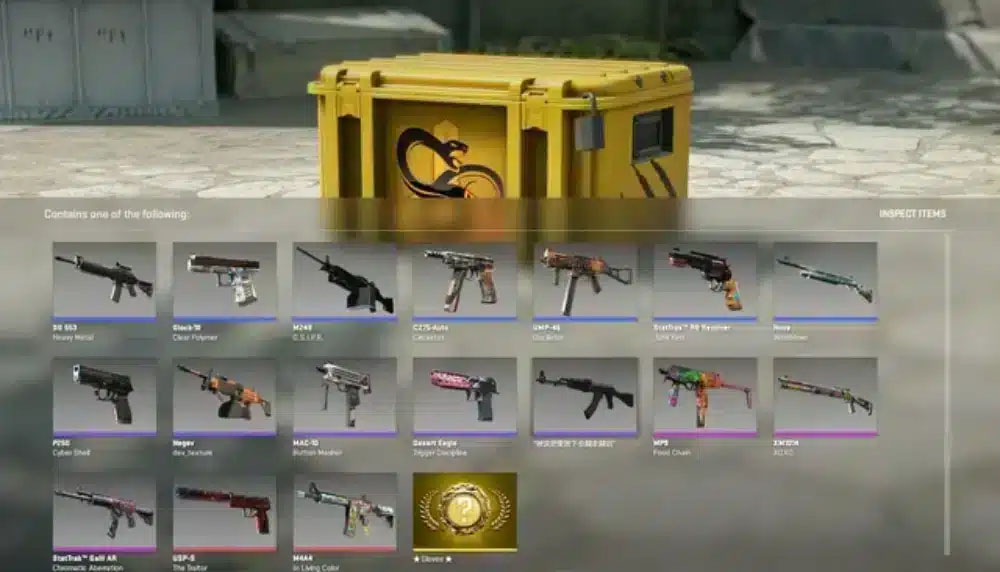
Some of the most valuable items in CS2 come from cases that no longer drop. When you upgrade csgo skins, a target tied to a discontinued case behaves differently from one still entering the market every week. Its supply is fixed, its price often climbs, and its buyer pool can be thin. Knowing where a skin comes from helps you judge whether it makes a smart target or a hard-to-sell trophy.
What “Discontinued” Means for a CSGO Case
Valve rotates which cases drop after matches. A case in the active pool is common and cheap, because new copies arrive constantly. Once Valve retires a case, no fresh copies enter the game, and the only supply left is what players already own. Trade-ups, deletions, and everyday openings slowly reduce that pool, so a retired case grows scarcer year after year. The skins inside it become harder to obtain by the same logic, since the case is their only source. Today’s weekly drops lean on a small set of active cases, such as Kilowatt, Revolution, and Dreams & Nightmares, which stay cheap because supply keeps growing. Retired containers move in the opposite direction.
The 2026 Rare Drop Pool Removal
For years, weekly drops carried a hidden chance, around 1%, of a legacy case worth more than a common one. That pool drew from more than 35 retired containers, including the original CS: GO Weapon Case and the Operation Bravo Case. Around January 2026, Valve quietly removed the rare pool, and free weekly drops stopped producing those legacy cases. The change did not touch the separate chance of pulling a knife or gloves from a case you open, but it cut off one of the last free routes to retired supply.
Why Retired Cases and Their Skins Gain Value
Static supply and steady demand pull prices up. The CS:GO Weapon Case, once handed out free, has climbed from a few dollars to around $80, a gain near 2,500% by mid-2025, according to Dignitas. The eSports 2013 Case rose from about $2 to $41, and the Operation Bravo Case from roughly $2 to $38. Souvenir relics follow the same pattern, with the ESL One Cologne 2014 Cobblestone package trading above $1,300. Skins locked inside these cases ride the same trend, since a retired source cannot make more of them. The pattern is steady enough that some players treat older cases as a slow asset, opening none and keeping them as supply falls.
What Discontinued Cases Mean When You Upgrade CSGO Skins
A target from a discontinued case may keep or grow its value, which makes a win worth more later. That same scarcity reduces the number of available buyers, so fewer buyers are ready to buy when you try to sell. Cases in particular come with wider spreads than liquid weapon skins. Before attempting an upgrade, ask whether a legacy target is better won and sold soon, or whether the underlying item could gain more value if left untouched. GudDrop shows the target’s current price as you build the attempt, which gives you a figure to assess against how often that item trades.
Making Discontinued Supply Work in an Upgrade
When you upgrade CSGO skins, a discontinued source can be a strength or a trap. A retired case or its skins can reward patience, but limited trading activity can leave a winning target unsold for a long time. Treat a legacy price as one that rewards the right buyer and the right timing. Match it against how easily the item moves today. GudDrop displays the odds and target price during setup, giving you a chance to assess scarcity, demand, and timing before committing.