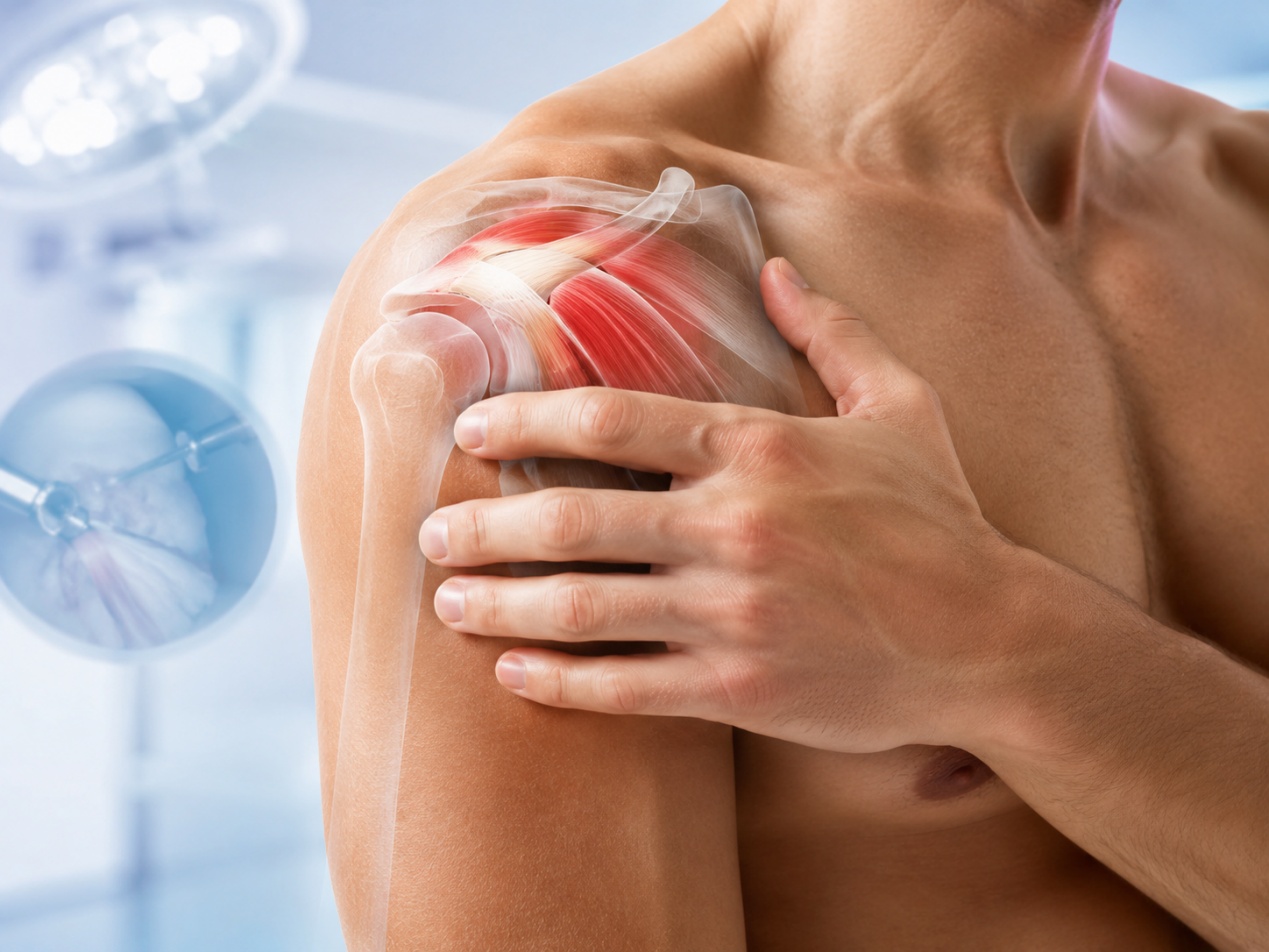
Shoulder arthroscopy is a minimally invasive surgical technique used for the diagnosis and treatment of several shoulder conditions. Initially performed mainly for diagnostic purposes, the method is now widely used to address many problems that previously required open surgery. Its application has also expanded beyond professional athletes, helping people whose shoulder symptoms interfere with everyday activities.
Understanding the Shoulder Joint
The shoulder is a complex joint with a greater range of movement than any other joint in the body. This mobility, however, comes with reduced inherent stability.
The shoulder girdle consists of the humerus, scapula and clavicle. The head of the humerus articulates with the glenoid, while the joint surfaces are covered by articular cartilage. Muscles connect to the bones through tendons.
An important stabilising structure is the rotator cuff, which includes the supraspinatus, infraspinatus, subscapularis and teres minor muscles and their corresponding tendons. These structures contribute to both shoulder stability and rotational movement.
What Is Shoulder Tendonitis?
Shoulder tendonitis may involve the supraspinatus tendon, which is located near the upper part of the shoulder joint. Supraspinatus tendonitis develops when the tendon becomes inflamed, often because repeated loading exceeds its ability to tolerate stress.
The condition may be associated with repetitive activity, prolonged shoulder positioning or pressure placed on the shoulder during sleep. It is particularly common among athletes who repeatedly move their arms above shoulder level, although it can affect anyone following repetitive work or an awkward movement.
Shoulder tendonitis differs from tendinopathy. Tendinopathy describes progressive degeneration of the tendon and may develop after repeated episodes of tendon inflammation.
Symptoms and Diagnosis
Possible symptoms include shoulder pain that may radiate towards the elbow, stiffness, swelling at the front of the shoulder and difficulty moving the arm. Some patients experience weakness, persistent pain at rest or night pain that can interrupt sleep.
Diagnosis is based on medical history, symptoms, possible injury mechanisms and clinical examination. The orthopaedic specialist evaluates movement, strength and shoulder function. When necessary, imaging such as X-rays, ultrasound or magnetic resonance imaging may be used to exclude other conditions.
Treatment and the Role of Shoulder Arthroscopy
Initial treatment for supraspinatus tendonitis is usually conservative. Management may include ice therapy, rest or activity modification, medication for pain and inflammation, and physiotherapy. In selected persistent cases, local injections of autologous healing factors derived from platelets may also be used.
When symptoms persist despite conservative treatment, shoulder arthroscopy may provide a surgical solution. During the procedure, a small camera called an arthroscope is introduced into the joint through incisions of approximately 5 mm. The enlarged image allows the surgeon to directly examine the internal structures of the shoulder and treat even small lesions using specialised instruments, sutures and anchors.
Shoulder arthroscopy is associated with a small surgical wound, reduced tissue trauma, fewer complications compared with older open techniques, less postoperative pain and a shorter recovery period. Depending on the condition treated, rehabilitation progresses through healing, restoration of range of motion and, finally, recovery of strength.
Restoring Shoulder Function
A structured rehabilitation programme is important after shoulder arthroscopy. Exercises may progress from passive movements to assisted active exercises and, later, strengthening against resistance. The objective is to restore movement, strength and safe participation in daily or athletic activities.
For personalised assessment of persistent shoulder pain, shoulder tendonitis or conditions that may require shoulder arthroscopy, contact Dr Emmanouil Brilakis, Orthopaedic Surgeon specialising in shoulder conditions, for further evaluation and appropriate treatment planning.