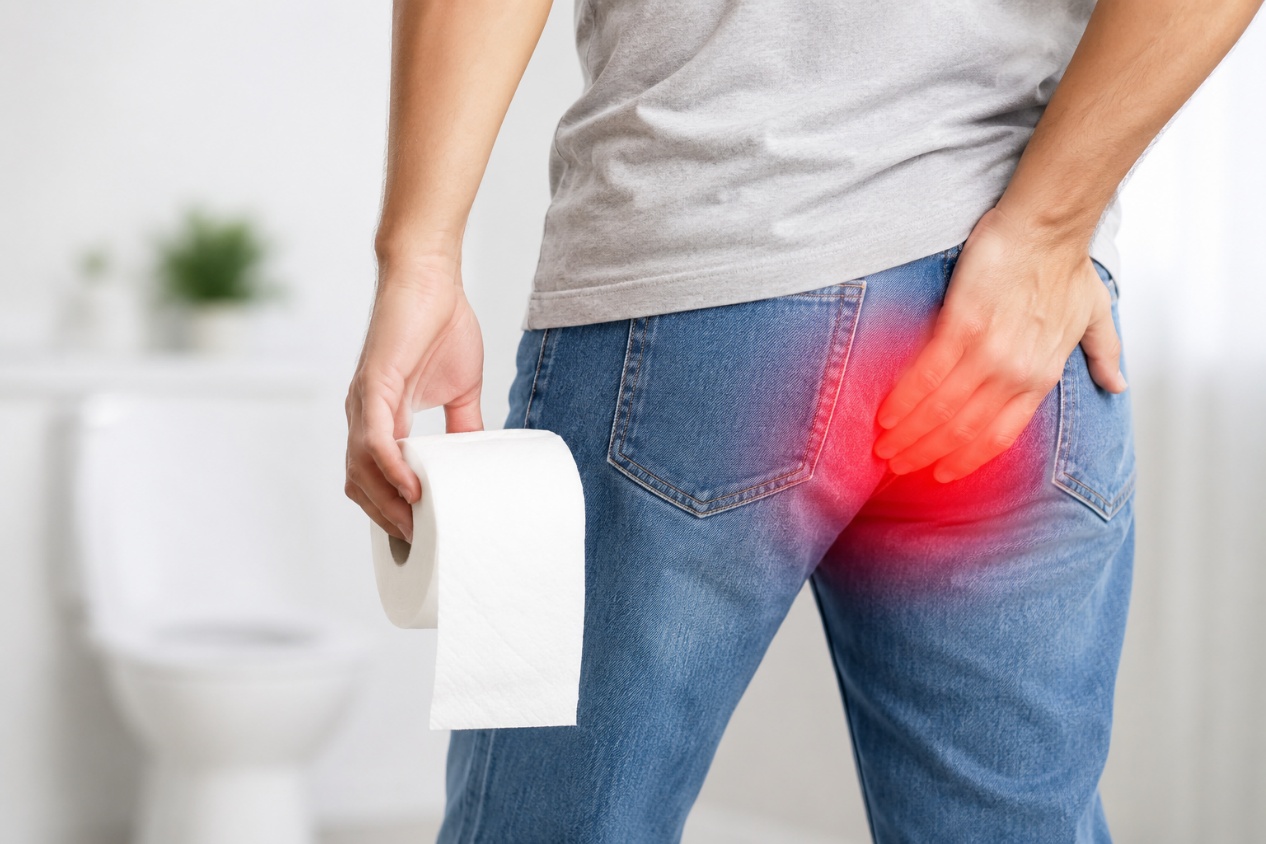
Hemorrhoids are a common condition that can significantly affect everyday comfort, especially when they cause pain, irritation or bleeding. Although hemorrhoids are frequently associated with blood from the anus, rectal bleeding should never automatically be attributed to them. Several conditions can produce similar symptoms, making proper medical evaluation particularly important.
What Are Hemorrhoids?
Hemorrhoids are normal vascular structures located in the anal region. They contain arteries and veins and contribute approximately 10% to fecal continence. Problems arise when these structures become enlarged, a condition known as hemorrhoidal disease.
Hemorrhoids can be internal or external. Internal hemorrhoids are classified into four grades according to the extent of prolapse. First-degree hemorrhoids remain inside the anus, while second-degree hemorrhoids protrude during bowel movements but return spontaneously. Third-degree hemorrhoids require manual repositioning, whereas fourth-degree hemorrhoids remain permanently prolapsed.
The grade does not always reflect the severity of symptoms. A person with second-degree hemorrhoids may experience considerable bleeding, while another person with fourth-degree disease may have few or no symptoms.
Why Do Hemorrhoids Develop?
Hemorrhoidal disease is closely associated with constipation. A sedentary lifestyle, limited physical activity and a diet low in fruits and vegetables can contribute to its development.
Other factors include pregnancy, advanced age, persistent coughing, frequent heavy lifting, prolonged sitting on the toilet and excessive straining during bowel movements. Hereditary and predisposing factors may also play a role.
Common symptoms include swelling, prolapse during defecation and fresh red bleeding. Patients may additionally experience mucus discharge, anal itching, irritation, fluid leakage or a sensation of incomplete bowel evacuation.
Blood from the Anus: Is It Always Hemorrhoids?
Although hemorrhoids are among the most frequent causes of blood from the anus, bleeding may have several other explanations. Anal fissures, anal warts, anal cancer, colorectal polyps, colorectal cancer, diverticulitis, inflammatory bowel diseases and angiodysplasia may also cause rectal bleeding.
Bright red blood usually originates from the lower part of the gastrointestinal tract. Darker red or black blood may indicate bleeding higher in the digestive system.
Because different disorders can present with similar symptoms, rectal bleeding requires medical investigation rather than self-diagnosis.
Diagnosis and Treatment
Diagnosis begins with a detailed medical history and examination by a specialized proctologist. Evaluation may include inspection of the perianal area, digital rectal examination and proctoscopy. Depending on the findings, high-resolution anoscopy, colonoscopy, sigmoidoscopy, blood tests or imaging examinations may also be recommended.
Treatment depends on the cause and severity of the condition. Conservative management of hemorrhoids may include increased dietary fiber, adequate water intake, improved toilet habits, stool softeners, topical treatments and regular exercise.
When symptoms persist, several minimally invasive or surgical techniques are available. These include rubber band ligation, infrared photocoagulation, sclerotherapy, Doppler-guided hemorrhoidal artery ligation, radiofrequency treatment, hemorrhoidectomy and laser hemorrhoidoplasty.
Laser Hemorrhoidoplasty LHP® uses a diode laser and a thin optical fiber to treat hemorrhoidal tissue internally without removing tissue. The technique aims to shrink the hemorrhoidal tissue and its feeding vessels while preserving the mucosa and anal sphincter.
When Medical Evaluation Is Important
Persistent rectal bleeding, significant pain, unexplained weight loss, changes in bowel habits, weakness or dizziness should not be ignored. Early identification of the underlying cause allows the most appropriate treatment to be selected.
For specialized evaluation of hemorrhoids, blood from the anus and other proctological conditions, you can contact Dr. Ioannis Dontas, Surgeon – Proctologist and Master Surgeon in Surgical Proctology, for individualized diagnosis and treatment.