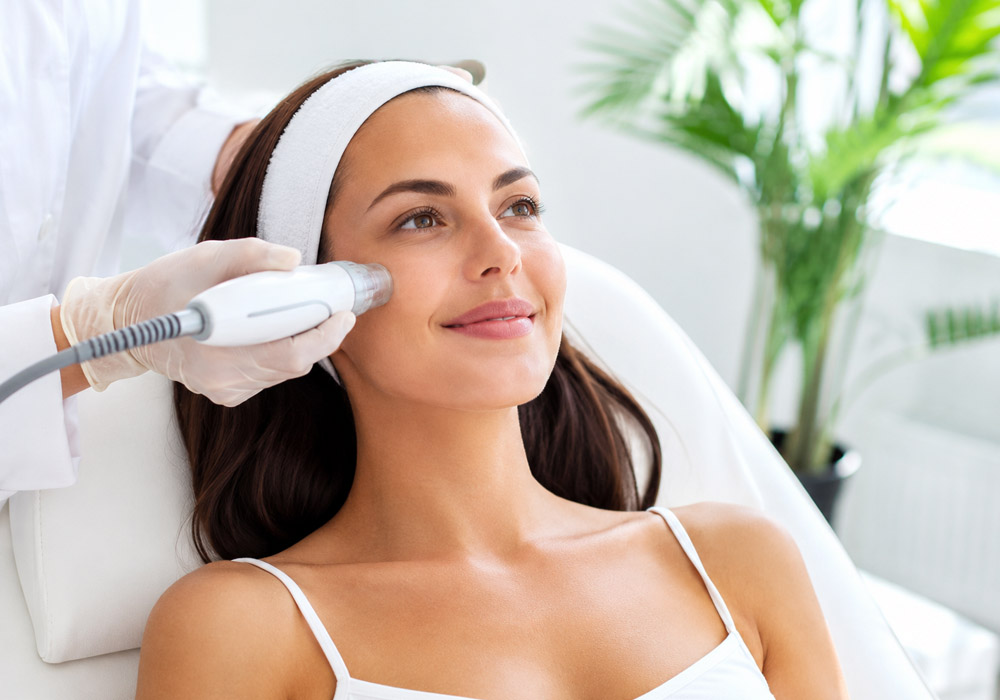
Picking a resurfacing treatment often comes down to comparing energy types rather than brand names. Venus Viva relies on radiofrequency, while classic lasers work with focused light, and that single difference shapes almost everything else about the experience.
This guide explains how each treatment works, what recovery looks like, and which skin concerns respond best to each option. By the end, you’ll have a clearer sense of which path fits your goals.
How Venus Viva and Laser Resurfacing Work
Venus Viva uses nanofractional radiofrequency energy delivered through tiny pins that create controlled micro-injuries in the skin. This triggers collagen production without relying on light absorption, giving the device a different safety profile than traditional lasers from the start.
Traditional lasers, by contrast, use concentrated light to either ablate the surface layer or heat deeper tissue, depending on the device. Ablative lasers remove skin cells outright, while non-ablative versions heat the dermis and leave the surface mostly intact, so patients often assume all lasers behave the same way when they really don’t.
If you’re comparing options in person, a provider offering a laser skin resurfacing treatment can walk you through which category their specific device falls into, since the term covers a wide range of technologies with different intensities and recovery timelines.
The practical takeaway is that RF and light-based systems reach the same general goal through different routes. One relies on heat conduction through the skin’s structure, the other on direct light energy, and that distinction matters most once you get into recovery and results.
Recovery Timelines and What to Expect Afterward
Redness and mild swelling show up after both treatments, but the intensity and duration differ. Venus Viva tends to produce milder redness that fades within a day or two, while ablative laser treatments can leave skin visibly raw for close to a week.
Social downtime, meaning the point where makeup can cover any residual redness, usually comes faster with RF-based treatments. Laser resurfacing, especially the ablative kind, often requires patients to plan around visible peeling and redness for several days before they feel comfortable in public.
Skincare gets restricted for a stretch after either treatment. Providers typically ask patients to skip retinoids, exfoliants, and direct sun exposure for one to two weeks, though laser patients often face stricter limits because the skin barrier is more disrupted.
Getting back to a normal routine, including exercise and makeup, tends to happen sooner with Venus Viva. Laser patients should expect a longer stretch before sweat, sunscreen reapplication, and regular skincare feel safe again.
Which Skin Concerns Each Treatment Targets Best
Acne scarring responds well to both treatments, though the mechanism differs. Venus Viva works gradually across multiple sessions to remodel scar tissue, while ablative lasers can produce faster results in fewer visits because they remove more tissue per treatment.
Pigmentation and sun damage tend to respond better to light-based lasers, particularly devices tuned to target melanin directly. Venus Viva can still improve tone over time, but patients chasing dramatic pigment correction often see quicker change with laser treatments.
Fine lines and skin laxity improve with both options, since collagen stimulation drives the tightening effect either way. Ablative lasers generally produce more visible tightening after a single session, while Venus Viva builds toward similar results more gradually.
Pore size shrinks noticeably with both approaches. Because Venus Viva reaches the pores gently and repeatedly, it appeals to people who want pore refinement without the more intense downtime that laser resurfacing can involve.
Safety Considerations for Different Skin Tones
Darker skin tones face a real risk of post-inflammatory hyperpigmentation with certain laser treatments, since concentrated light can interact unpredictably with higher melanin content. This is one of the biggest factors providers weigh before recommending a specific device.
Venus Viva’s radiofrequency approach doesn’t target melanin the way light-based lasers do, so it tends to carry a lower risk profile for patients with deeper skin tones. That said, no treatment is entirely without risk, and provider experience still matters a great deal.
Because RF energy passes through the skin without being absorbed by pigment, it behaves more predictably across a wider range of skin tones. Laser devices vary widely, with some wavelengths considered much safer for darker skin than others.
Any provider should screen skin tone and history before recommending either treatment. A quick consultation, including a review of past sun exposure and any history of pigment issues, helps rule out unnecessary risk before booking a single session.
Treatment Plans and How Long Results Last
Venus Viva typically involves a series of three to four sessions spaced a few weeks apart, since the gentler energy delivery works best with repeated exposure. Laser resurfacing, especially ablative versions, often produces noticeable change in just one or two sessions.
Maintenance also looks different for each option. Venus Viva patients often return for a touch-up session every six months or so to sustain results, while laser patients may go a year or longer before needing another treatment.
Results from Venus Viva tend to build steadily and last around six to twelve months before fading, depending on skin type and lifestyle factors like sun exposure. Laser resurfacing results, particularly from ablative treatments, can last several years in some cases.
Across multiple sessions, both treatments show cumulative improvement, meaning each round builds on the last. Patients who stick with a full treatment plan, rather than stopping after one session, tend to see the most lasting change.
Cost and Long-Term Value
Per-session pricing tends to favor Venus Viva, since the treatment itself is less intensive and requires shorter appointment times. Ablative laser sessions often carry a higher price tag given the equipment involved, and the longer recovery support patients need afterward.
Looking at a full treatment plan changes the math somewhat. Venus Viva requires multiple sessions to reach its full effect, so the total cost can approach or even exceed a single laser session, depending on the provider and location.
Recovery time adds its own cost, especially for people who can’t afford to take a week off work or skip social plans. Venus Viva’s shorter recovery window often makes it the more practical choice for anyone juggling a busy schedule.
When you weigh price against how long results last, laser resurfacing can offer better long-term value for patients chasing dramatic, longer-lasting change. Venus Viva suits those who prefer a gentler process spread across more visits instead.
Wrap Up
Both treatments can deliver real improvement, and the right pick usually comes down to how much downtime you can tolerate and how dramatic a change you’re after. Venus Viva suits gradual improvement with less disruption, while laser resurfacing fits patients seeking faster, more intense results.
Talking through your skin type, budget, and schedule with a qualified provider is still the best way to choose the right option. Neither option works as a one-size-fits-all answer, and a proper consultation makes all the difference.