Most outdoor weddings in Los Angeles are planned months out. The venue’s locked, the caterer’s confirmed, the photographer’s hired. Lighting comes later, usually much later. And that’s where the problems start.
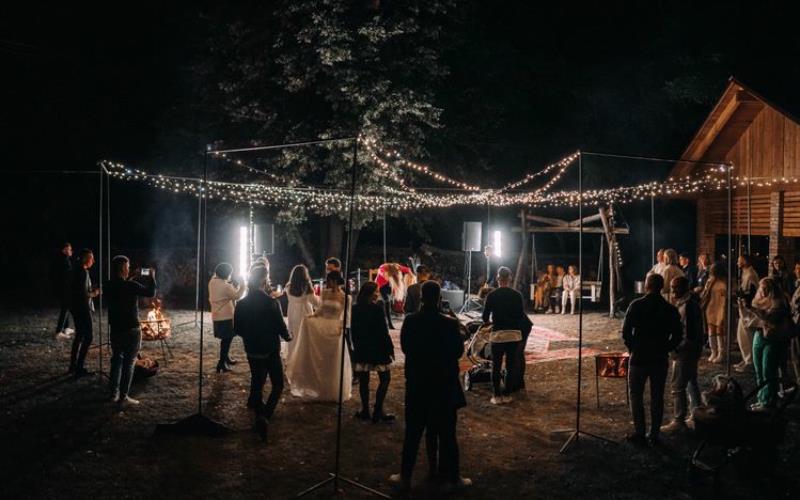
Outdoor event lighting vendors deal with conditions that indoor crews rarely encounter: generator loads that have to be calculated on-site, wind patterns that shift in October, venues with no overhead rigging infrastructure, and teardown windows that close whether the crew is finished or not. The wedding planners in LA who consistently pull off clean outdoor receptions aren’t getting lucky. They’re running a vetting process, and they start it early.
Why Outdoor Event Lighting Is Its Own Category
Here’s the thing: ballroom lighting experience doesn’t travel. Hotel venues have built-in infrastructure: power panels in the ceiling, rigging points built into the structure, and a controlled indoor environment where weather isn’t a factor.
Take those same vendors to a garden terrace in Bel Air or a canyon property in Topanga and the whole framework changes. Outdoor is its own discipline. Vendors who treat it as an extension of interior work create problems on event day, not from carelessness, but from inexperience with the specific variables that outdoor work introduces.
Power Planning on Location
Most outdoor venues in Los Angeles don’t have adequate dedicated power for a full event lighting rig. That’s the baseline reality. The vendor needs to bring generator capacity for bistro lights, uplights, spotlights, and architectural accent elements running simultaneously, often at a Malibu property or a Pasadena estate where the nearest utility panel is 200 feet from the reception area.
An experienced outdoor event lighting vendor calculates that load before quoting. One without real outdoor experience estimates. The gap shows up when a breaker trips mid-reception, or when a generator sized for ambient lighting can’t handle the caterer’s heat lamps coming online at 7 p.m. with 150 guests on the patio.
Weather, Wind, and Rigging Reality
Santa Ana winds move through greater Los Angeles from September into November. Some years they’re mild. In a bad year, sustained gusts hit 40 miles per hour or higher across hillside areas from the Valley to the Santa Monica Mountains. A vendor with only indoor experience may not understand what that does to bistro strands hung between temporary poles on a 35-foot span.
String light tension systems behave differently in open air. Vendors with real outdoor event experience build rigging with lateral load in mind and know when a span is too wide to hold in high-wind conditions. Those without that experience over-promise on canopy coverage and find out why that’s a problem during setup, not in the planning conversation where the problem could have been solved.
What Experienced Wedding Planners Look For in Outdoor Event Lighting Vendors
And honestly, it isn’t price. The first question experienced LA wedding planners ask a lighting vendor is about outdoor-specific portfolio work. Indoor event lighting and outdoor event lighting look similar in a brochure. They’re not the same job.
Portfolio That Shows Comparable Outdoor Work
The relevant work is outdoor: receptions in open venues, garden ceremonies, backyard installs where the vendor brought their own power and rigged into whatever the property offered. Planners want documentation from events at venues comparable in terrain, scale, and season. A Malibu bluff wedding in late October is a different job than a Pasadena garden reception in early June. Portfolio specificity tells a planner whether the vendor has actually solved the type of problem they’re about to hire them for.
Generic brochure photos without venue identification are a signal the vendor can’t point to relevant outdoor experience. That’s the tell.
References That Include Venue Coordinators
And honestly, couples remember the lighting at 8 p.m. with the reception at full swing. Venue coordinators remember the load-in crew’s arrival time, how the vendor handled a delayed start when another vendor ran over, and whether the teardown team left the property clean. Those are different evaluations. Both matter.
Planners who work repeatedly with the same lighting vendors are collecting both sets of data. When vetting someone new, asking for coordinator references at venues the vendor has actually worked returns significantly more useful information than client reviews alone. Couples aren’t watching the clock on teardown. The venue coordinator is.
The Vendor Conversation That Defines a Good Hire
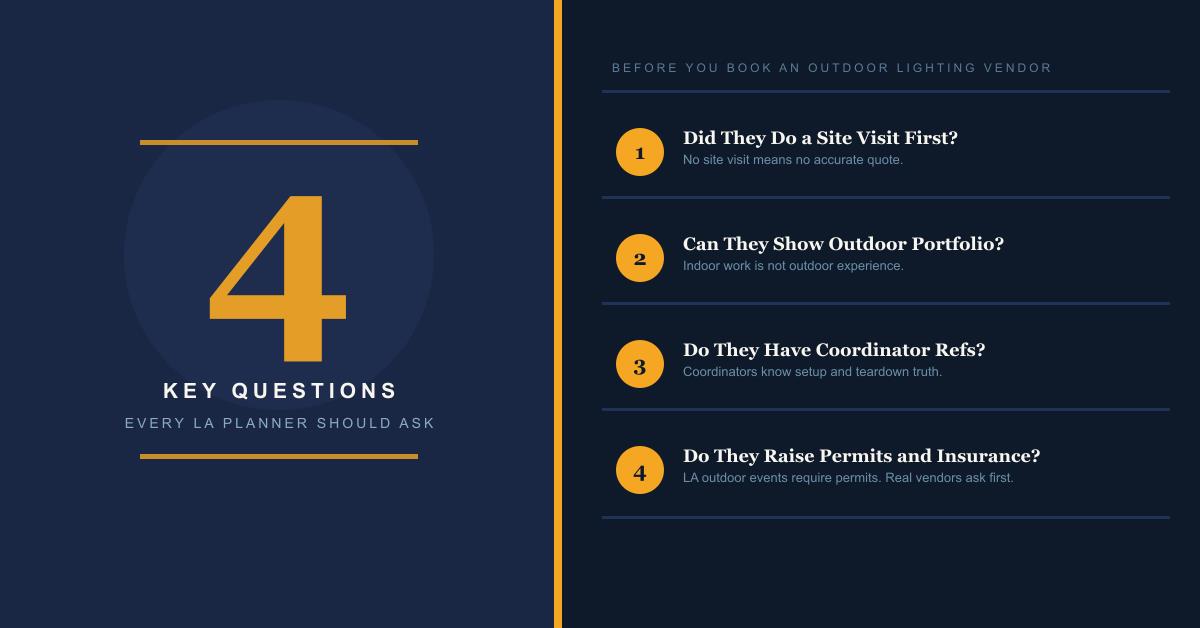
Pricing conversations with outdoor event lighting vendors happen too early in most processes. Vendors who do serious outdoor work won’t quote accurately without a site visit. Push for a number before a walk-through and you’re setting up for a figure that changes substantially after the vendor sees what the venue actually involves.
What a Real Site Visit Covers
A real site visit for an outdoor event covers power access and panel proximity, overhead structure availability for rigging, surface conditions for pole placement, wind exposure at the specific time of year, and any venue restrictions on attachment methods. The International Live Events Association recommends on-site assessments before every event production contract, regardless of event scale.
Vendors who quote from venue photos or floor plans are accepting uncertainty. They’re also passing that uncertainty directly to the client.
Timeline and Teardown Questions
How much load-in time does the vendor need, and does that window match the venue’s setup access? What’s the teardown timeline, and does it fall inside the venue’s curfew? What happens operationally if the ceremony runs 30 minutes late?
Vendors who answer those questions with specifics have managed those situations before and built procedures around them. Vendors who pause to think about it are working through the scenario for the first time in this conversation. That’s a meaningful distinction to catch before a contract is signed.
Red Flags That End a Vendor Conversation Early
Thing is, a few behaviors in early conversations reliably predict problems down the line.
Vendors who quote without seeing the site consistently underestimate generator requirements, rigging materials, and crew count. The initial figure looks competitive. The invoice at the end of the event reflects the actual scope they discovered on setup day.
Vendors who can’t produce references from outdoor events are bringing indoor experience to an outdoor job. The production challenges are different enough that prior indoor work isn’t evidence of outdoor capability.
Vendors who don’t raise permit and insurance questions when booking Los Angeles outdoor events are leaving compliance gaps open. Many LA outdoor venues require event production permits, and the lighting vendor’s equipment is part of that compliance picture. According to Special Events, vendor permitting and liability documentation is among the most commonly overlooked items in outdoor event contracting. A vendor who skips the site visit, can’t produce outdoor references, and doesn’t raise the permit question is likely to become a problem the planner absorbs on event day.
What Los Angeles Adds to the Equation
Look, Los Angeles isn’t a single outdoor event environment. The venues vary significantly: Malibu bluff estates with ocean-facing wind exposure, canyon properties in Topanga and the Santa Monica Mountains, rooftop venues in West Hollywood, classic garden estates in Pasadena and San Marino. Each setting carries its own requirements for outdoor event lighting vendors.
Fire marshal access standards in canyon and hillside venues run stricter than in flat residential or commercial areas. Generator placement has to account for proximity to dry brush. Fire season in Southern California runs into November most years, sometimes longer. June Gloom along the coastal corridor extends into July in some years, and overcast skies at 7 p.m. change the timing and intensity requirements for ambient lighting significantly. Historic properties in Pasadena and San Marino often prohibit driving stakes into turf or attaching rigging to mature trees, which changes the entire rigging plan and needs to be worked out before setup day.
Elevated Seasons operates as an outdoor event lighting company across Los Angeles and Ventura County, with crews who have navigated these specific conditions across venue types, from coastal Malibu properties with high wind exposure to Conejo Valley estates with fire marshal access requirements.
The selection process that consistently delivers results starts with the venue, not the vendor. Understand the power access, rigging restrictions, and curfew window first. That determines which outdoor event lighting vendors can realistically execute at the specific location. For a detailed look at how site-specific decisions shape outdoor lighting design, the breakdown of lighting a Beverly Hills backyard event covers exactly the kind of site-driven choices that define this work.
Brief a shortlisted vendor with the venue type, guest count, setup window, teardown deadline, and style direction. Compare how each one approaches the site visit and what questions they ask before quoting. The outdoor event lighting vendors worth hiring ask more questions in that first conversation than they answer. That’s how you find the ones who’ve actually done this before.