ABA therapy is most useful when a child can apply meaningful skills beyond a therapy session. Families who work with providers such as triangleaba.com often want to know how communication, independence, play, and safety skills can become part of ordinary life at home, school, and in the community.
That process takes planning, patience, and teamwork. Rather than treating daily life as separate from therapy, caregivers and professionals can use regular routines and real experiences to help children practice skills in ways that feel useful, respectful, and achievable.
Why Daily-Life Practice Matters
A skill has greater value when a child can use it where it matters. Asking for help with a zipper at home, requesting assistance from a teacher, or communicating a need at a store are all examples of skills that serve a practical purpose. Daily routines create natural chances to build communication, safety, self-care, learning, and participation without turning every moment into a formal lesson.
What ABA Therapy Can Teach
Applied Behavior Analysis, commonly called ABA therapy, is a set of learning-based practices used to support individualized, socially meaningful goals. It is not one single technique. A plan may include reinforcement, prompting, task analysis, visual supports, and teaching within natural activities. The behavioral approaches described by the CDC also emphasize that progress can be tracked and measured across different teaching styles.
Goals may address functional communication, routines, social interaction, self-care, play, leisure, school readiness, safety, or community participation. The best goals are relevant to the child’s life, preferences, communication style, and family priorities.
How Skills Carry From One Setting To Another
Generalization means applying a learned skill to different people, places, materials, or instructions. A child might independently ask for a break with a therapist but need more support to make the same request with a parent or teacher. This does not mean the child has failed. It means the skill needs practice under new conditions.
- Across people: practicing with caregivers, siblings, teachers, and peers.
- Across places: using the skill in a clinic, kitchen, classroom, playground, or store.
- Across situations: responding to different wording, materials, schedules, and expectations.
Generalization should be planned early. Small, supported changes in people, sounds, rooms, and routines can help a skill become more flexible over time.
Using ABA Skills At Home
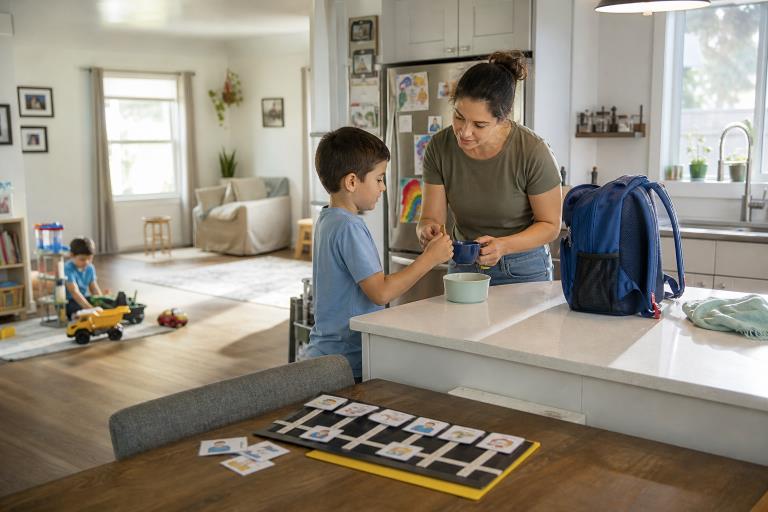
Home practice works best when it fits into routines that already happen. Getting dressed, brushing teeth, eating meals, cleaning up toys, getting ready for bed, and asking for a break all offer brief opportunities to practice independence.
A Simple Morning Routine
- Break the routine into small, clear steps.
- Use a picture schedule or brief directions to show what comes next.
- Offer help only when it is needed.
- Praise or reinforce independent steps right away.
- Gradually reduce prompts as the child becomes more successful.
First-then language, limited choices, visual schedules, and extra response time can make routines easier to understand. For example, “First shoes, then tablet” may provide a clear and predictable path through a transition.
Supporting Skills At School
Skills are more likely to carry over when caregivers and school staff use similar cues and expectations. Classroom goals may include following a visual schedule, requesting help, transitioning between activities, waiting briefly, working near peers, and cleaning up materials.
Collaboration can include caregivers, teachers, special education staff, speech professionals, occupational therapy providers, and behavior professionals. Shared strategies should still respect the child’s sensory needs, pace, strengths, and preferred ways of communicating.
Practicing Skills In The Community
Community outings offer real opportunities to practice communication, flexibility, safety, and independence. Start with familiar, shorter visits before moving to busier or less predictable settings. Useful goals may include ordering a snack, choosing an item in a store, waiting in line, taking turns at a playground, or asking for help at a library.
- Preview the outing with photos, pictures, or a short social story.
- Bring communication tools and sensory supports if helpful.
- Choose one or two realistic goals for the visit.
- Keep the first practice trips short.
- End positively and discuss what went well.
The Caregiver’s Role
Caregivers do not need to become behavior experts. A few repeatable actions can make a major difference: use familiar key phrases, give clear choices, reinforce useful communication, allow time for a response, and share observations with the treatment team. Caregiver coaching can help adults feel confident using strategies during real routines rather than relying on long practice sessions.
Building A Consistent Support Team
Consistency does not mean every adult must respond in the same way. It means the team agrees on the goal’s purpose and the general support plan. A short shared plan can list the target skill, prompt to use, preferred reinforcement, definition of success, and what to do when help is needed.
For example, a child may use a spoken request at home and a picture-based request at school. Both can be valid communication methods. The team can focus on helping the child reliably get needs met while gradually expanding options as appropriate.
Tracking Progress Without Added Stress
Simple notes can reveal patterns without creating extra pressure. Track how often a skill occurs, how much help is needed, how long it takes, which settings support success, and what happens before and after the behavior. A skill completed independently is different from a skill completed after several prompts, and both details matter.
Progress may slow when sleep, health, schedules, sensory demands, or communication needs change. Teams can use that information to adjust goals or supports. The evidence review of Applied Behavior Analysis from the National Academies also notes that ABA includes multiple practices and that meaningful outcomes should be useful in real life.
Common Mistakes To Avoid
- Trying to teach too many skills at once.
- Using prompts for longer than necessary.
- Expecting a skill to transfer without practice in new settings.
- Changing wording or reinforcement without a shared plan.
- Focusing only on reducing behavior instead of teaching a useful replacement skill.
- Overlooking fatigue, pain, sensory overload, or communication barriers.
- Measuring success by appearance rather than functional independence.
Common Questions About ABA Therapy
How Long Does It Take For A Skill To Carry Over?
The timeline varies. Some skills generalize quickly, while others need repeated practice across people, places, and situations.
Can ABA Therapy Skills Be Practiced At Home?
Yes. Communication, routines, play, and self-help skills can often be practiced at home when caregivers receive clear, individualized guidance.
Does Every Child Need The Same ABA Goals?
No. Goals should be individualized and meaningful to the child and family. A useful goal for one child may not be useful for another.
What If A Child Uses A Skill In Therapy But Not At School?
Review the setting, instructions, prompts, materials, sensory demands, and reinforcement. The team may need to teach the skill in smaller steps within the school environment.
Final Thoughts
ABA therapy has the greatest day-to-day impact when goals connect to real life. Home routines, school activities, and community outings can all become practical opportunities to build skills. With clear goals, respectful support, caregiver involvement, and steady communication among team members, children can develop abilities that remain useful well beyond the therapy setting.