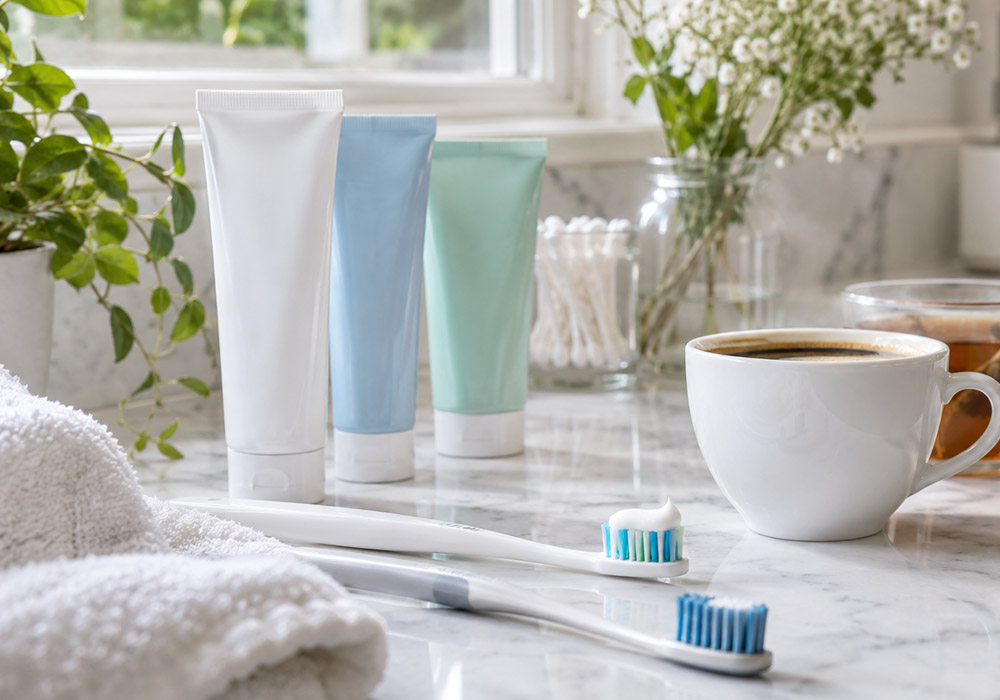
Staining is the price you pay for your morning ritual. Coffee and tea contain tannins that bind to enamel and leave behind that yellowish tint no amount of brushing seems to fix. You can scrub all you want, but regular toothpaste just doesn’t have the abrasives or chemical agents needed to lift those surface stains. Over-the-counter whitening toothpastes are formulated differently than your standard paste, so they actually make a visible difference when you use them consistently. Here are the best options on the market right now, ranked by how well they handle the specific stains that coffee and tea leave behind.
1. Sensodyne Extra Whitening Toothpaste
If your teeth are sensitive, this is the one you want. Sensodyne builds its formula around strontium acetate and potassium nitrate, which block the microscopic tubules in your dentin that trigger pain when you sip something hot or cold. The whitening element comes from a gentle silica base that polishes away surface stains without wrecking your enamel. You get a modest level of stain removal compared to more aggressive pastes, but you don’t sacrifice comfort to get there.
The trade-off is that this works slower than the heavy-duty options on this list. You’ll see gradual brightening over a few weeks rather than dramatic results in days. For coffee and tea drinkers who already deal with sensitivity from acidic beverages, that trade-off is usually worth it. Most users pair this with a whitening mouthwash for faster results, but the toothpaste alone holds its own for maintenance.
2. Colgate Optic White Advanced Whitening Toothpaste
Colgate’s Optic White line uses hydrogen peroxide as its active whitening agent, which is the same chemical used in professional whitening trays but at a lower concentration. That means it actually breaks down the stain molecules themselves rather than just scrubbing at them. The formula also includes hydrated silica for mechanical polishing, so you’re attacking stains from two angles at once.
This paste is notably effective on the brownish stains that black coffee leaves behind. It does take about two weeks of twice-daily brushing for the peroxide to build up enough to make a visible difference, and you’ll want to be careful not to overbrush. The American Dental Association’s guidance on whitening toothpaste confirms that peroxide-based formulas are the most effective class of over-the-counter whitening products available.
3. Crest 3D White Brilliance Toothpaste
Crest built this one specifically for people who drink staining beverages. The formula uses a combination of optical brighteners and a silica polishing system that tackles both intrinsic and extrinsic discoloration. The optical brighteners coat the teeth with a thin blue-tinted layer that cancels out yellow tones, giving you an instant brightening effect that lasts until your next meal.
The polishing agents handle the deeper surface stains over time. This is one of the few toothpastes that shows visible results within the first few brushings, which makes it a favorite for people who have an event coming up and need a quick boost. The downside is that the optical brightening effect washes away fairly quickly with food and drink, so you’ll need to reapply the treatment by brushing again or using a compatible whitening rinse.
4. Arm & Hammer Advance White Extreme Whitening Toothpaste
Baking soda is the workhorse ingredient here, and it’s one of the oldest whitening methods around. Arm & Hammer uses a high-concentration baking soda formula that physically lifts stains from the enamel surface while also neutralizing the acids in your mouth that weaken enamel. The gritty texture takes some getting used to, but that grittiness is exactly what makes it so effective at removing coffee and tea film.
This is a budget-friendly option that performs surprisingly well against mid-range and premium brands. You don’t get the peroxide chemical action that Colgate or Crest offers, so it’s not as effective on deep, set-in stains. For everyday maintenance against new stains from your coffee habit, though, this is hard to beat at the price point. The baking soda also leaves your mouth feeling exceptionally clean and fresh, which isn’t the case with many gel-based whitening pastes.
5. Tom’s of Maine Simply White Toothpaste
If you prefer a natural formula, this is the whitening paste to consider. Tom’s of Maine uses a hydrated silica base derived from natural sources as its abrasive, along with a blend of botanicals that gently clean without the harsh chemicals found in mainstream brands. It doesn’t contain peroxide or synthetic optical brighteners, so the whitening action is purely mechanical.
That’s a significant limitation for heavy coffee and tea drinkers, because mechanical abrasion alone won’t shift deep stains. You’ll get good results on the surface film that accumulates between dental cleanings, but you won’t see the dramatic transformation that peroxide formulas deliver. This is more of a maintenance and prevention product than a stain reversal product. If your teeth are already reasonably white and you just want to keep them that way without fluoride-alternative concerns, this fits the bill.
6. Hello Activated Charcoal Whitening Toothpaste
Activated charcoal is controversial in the dental community because of its abrasiveness, but it does work for surface stains. Hello’s formula pairs finely ground charcoal with silica to give you a dual-action polish that lifts coffee and tea residue from the enamel. The charcoal also has some natural odor-absorbing properties, which helps with the stale coffee breath that lingers after your third cup of the morning.
You should know the risks before you commit to charcoal toothpaste. The Scientific American review of charcoal toothpaste highlights concerns about enamel erosion with long-term use. The particles are abrasive enough to remove stains, but they can also remove some of your protective enamel surface if you brush too vigorously or use the paste too frequently. Use this one sparingly, maybe two or three times a week, and stick with a gentler paste on other days.
7. Boka Ela Mint Toothpaste
Boka’s formula uses nano-hydroxyapatite rather than fluoride or peroxide as its active ingredient. Nano-hydroxyapatite is a synthetic form of the calcium phosphate that makes up your tooth enamel, and it works by remineralizing the enamel surface while gently polishing away stains. This is a Japanese-developed ingredient that has been used in oral care products for decades, though it’s only recently gained traction in North American products.
The benefit here is that you’re actively rebuilding your enamel while you’re whitening, which is something none of the other pastes on this list can claim. That makes it a strong choice for coffee drinkers whose enamel has already thinned from years of acidic beverage consumption. The whitening action is gentle and gradual, so don’t expect dramatic results in the first week. It also has a clean, refreshing mint flavor that doesn’t linger with an artificial aftertaste.
8. Lumineux Whitening Toothpaste
Lumineux takes a different approach entirely, using essential oils and Dead Sea salt instead of abrasives or peroxides. The formula is designed to break down the protein matrix that holds stains to the enamel, causing the stains to release without any physical scrubbing action. That makes it one of the gentlest whitening options available, suitable even for people with receding gums or exposed dentin.
The trade-off is speed. This is a slow burn, typically requiring a full month of consistent use before you notice meaningful changes in tooth color. It’s also more expensive per tube than most alternatives, which makes it a harder sell for casual users. But if you’ve tried abrasive pastes and found they made your sensitivity worse, this is the most comfortable way to address coffee stains without triggering pain.
What to Look for When Choosing a Whitening Toothpaste
Peroxide-based formulas are the gold standard for chemical stain breakdown, and they’re your best bet if you have deep, set-in discoloration from years of coffee and tea consumption. Abrasive pastes with silica or baking soda work well for surface film but won’t touch deeper stains. Charcoal pastes offer quick results but come with enamel erosion risks if you overuse them. If you have sensitivity, look for pastes that combine either potassium nitrate or nano-hydroxyapatite with a gentle abrasive so you’re not trading one problem for another.
The consistency of your brushing habits matters more than the specific brand you choose. Whitening toothpastes only work if you use them twice daily for several weeks, and you’ll undo all that work if you’re sipping coffee all day without rinsing your mouth with water periodically. For serious stain issues that don’t respond to any of these products, professional whitening from a dentist kitchener practice using in-office or take-home trays is the definitive solution, since those treatments use much higher concentrations of active agents than anything you can buy at retail.
Your daily stain situation is manageable without professional intervention in most cases, and picking the right paste is the single easiest habit change you can make. Try one of these for a month and judge the results honestly, because some of them work dramatically better for certain people’s enamel chemistry than others.