A long road trip can be a great way to see new places, but even a well-maintained vehicle can run into unexpected problems. A weak battery, low fuel, poor visibility, a flat tire, or a small roadside emergency can quickly turn an easy drive into a stressful situation.
That is why packing a few practical items before leaving home can make such a difference. You do not need to fill the trunk with every tool imaginable. A basic emergency kit built around the most common roadside problems can give drivers more options when something does not go according to plan.
One useful item to consider is a portable car battery charger. Battery-related problems are among the most frustrating issues to deal with during travel, especially if the vehicle will not start at a hotel, gas station, rest area, or remote destination.
Battery equipment is only one part of preparing for a longer drive. Fuel planning, working exterior lights, tire equipment, and basic emergency supplies can all help make the trip easier.
The best road-trip kit is one you prepare before you actually need it. These five essentials can provide a practical starting point for drivers heading out on longer trips.
Emergency Power for Unexpected Battery Trouble
The first road-trip essential is reliable backup power.
A battery can become discharged for several reasons. Lights may accidentally be left on, electronics may continue drawing power while the engine is off, or an aging battery may simply struggle after several starts during a long day of travel.
Before leaving, drivers should pay attention to how the vehicle starts. Slow cranking, clicking, or repeated jump starts may indicate that the battery should be tested before the trip.
A portable charger or properly maintained jump-start device can provide additional options if the battery loses power. Any charging equipment should be compatible with the vehicle and battery type, and drivers should understand how to use it before an emergency occurs.
Jumper cables are also worth keeping in the vehicle. While they require another compatible vehicle to provide assistance, they can still be useful if a battery becomes discharged unexpectedly.
Drivers should follow the jump-start procedure listed in the owner’s manual. Some modern vehicles have dedicated connection points rather than requiring the clamps to attach directly to the battery.
The second essential is a basic tool and roadside kit.
A small socket set, screwdrivers, pliers, flashlight, work gloves, and tire pressure gauge can help with simple inspections and minor problems. Drivers do not need to attempt complicated roadside repairs, but basic tools may help tighten a loose battery connection, inspect a component, or make another small adjustment.
A flashlight is especially important. Vehicle trouble does not always happen during daylight hours, and trying to inspect a tire or engine compartment in the dark can be difficult.
Reflective warning triangles or other roadside visibility equipment can also help other drivers notice a stopped vehicle. If you need to pull over, move as far away from traffic as safely possible and follow local roadside safety guidance.
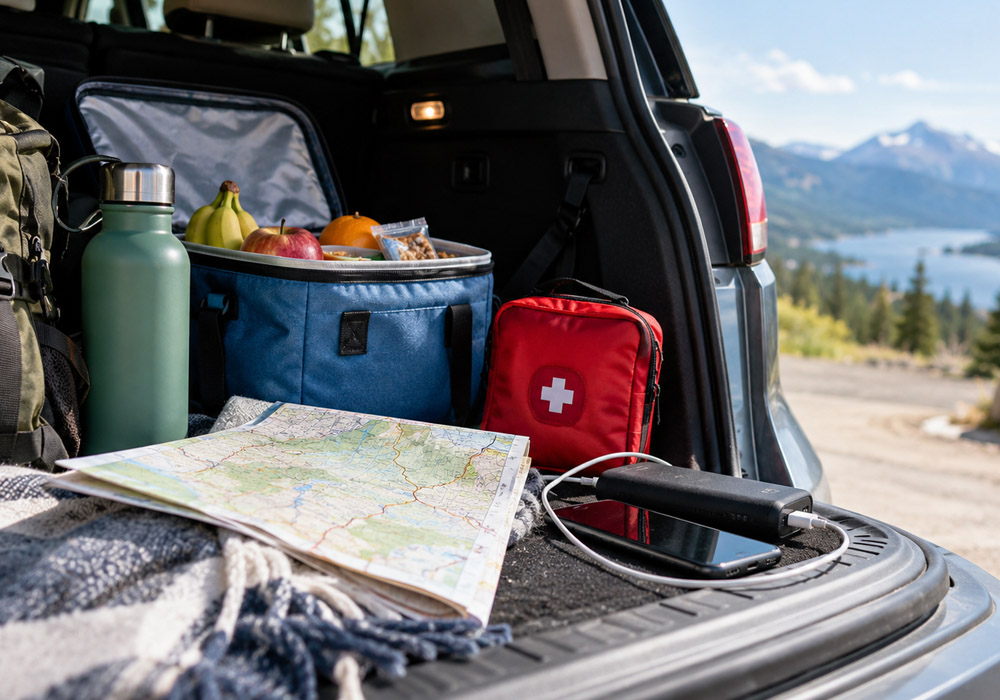
A first-aid kit is another simple addition. Minor cuts, scrapes, headaches, or other small issues can happen during travel, especially on longer trips involving hiking, camping, or outdoor stops.
Drivers should also carry water and a phone charging option. If the vehicle becomes disabled in an unfamiliar area, having a working phone can make it easier to contact roadside assistance, a repair shop, or family members.
The third essential is tire equipment.
Before leaving, check tire pressure when the tires are cold and use the pressure recommendation listed by the vehicle manufacturer. This information is commonly located on a label inside the driver’s door area.
Inspect the tread and sidewalls for visible damage, cracking, unusual bulges, or embedded objects. A tire that already appears questionable should be inspected before a long highway trip.
Drivers should also know whether the vehicle has a spare tire, tire inflator kit, or another flat-tire solution. Some modern vehicles do not include a traditional spare.
If a spare is present, check its pressure before traveling. A spare tire that has been sitting unused for years may be underinflated when it is finally needed.
Knowing where the jack and lug wrench are stored can also save time. It is much easier to learn this information at home than on the shoulder of a highway.
Fuel and Visibility Gear for Longer Drives
The fourth essential is a plan for fuel.
Long stretches of highway, rural roads, and remote destinations may have fewer gas stations than drivers expect. Planning fuel stops before the tank becomes critically low can help prevent unnecessary problems.
Some travelers also choose to carry an approved gas can when the type of trip and local rules make it appropriate. Fuel containers should always be used and transported according to their instructions and applicable safety requirements.
Fuel should never be carried casually inside the passenger compartment. Gasoline vapors are hazardous, and fuel must be kept away from heat, sparks, and other ignition sources.
For most road trips, good fuel planning is more important than carrying extra gasoline. Drivers can identify stations along the route, especially before entering more remote areas.
Keeping the fuel tank above a very low level also leaves more flexibility if a planned station is closed or inaccessible.
The fifth essential is working visibility equipment.
Road trips often involve early departures, nighttime driving, rain, fog, or unfamiliar roads. Headlights, wipers, washer fluid, and exterior lights should all be inspected before leaving.
If a headlight bulb is dim or burned out, replacing it before the trip can improve nighttime visibility and help other drivers see the vehicle more clearly.
Check both low and high beams where appropriate. Brake lights, turn signals, reverse lights, and hazard lights should also work correctly.
Cloudy headlight housings can reduce light output even if the bulbs are still working. If the lenses have become heavily oxidized or yellowed, restoration or replacement may improve visibility depending on their condition.
Windshield wipers are another important part of nighttime and poor-weather driving. Blades that streak, skip, chatter, or leave sections of water behind may need replacement.
Top off windshield washer fluid before departure as well. Bugs, dirt, dust, road salt, and spray from other vehicles can quickly reduce visibility during a long drive.
Drivers should also clean the inside of the windshield. Film and haze that seem minor during the day can create significant glare from oncoming headlights after dark.
A pair of sunglasses can help with daytime glare, especially when driving directly into the sun. Keeping a microfiber cloth in the vehicle can also make it easier to clean glasses, mirrors, or the windshield during stops.
Good road-trip preparation should include a quick vehicle inspection in addition to packing emergency gear. Check engine oil, coolant according to the owner’s manual, tire pressure, lights, and obvious fluid leaks before leaving.
Listen to the vehicle during the first part of the trip too. New vibrations, warning lights, unusual smells, or changes in steering and braking should be taken seriously rather than ignored because the trip has already started.
Packing emergency equipment does not mean expecting something to go wrong. It simply gives drivers more options when unexpected situations occur.
A strong road-trip kit does not need to be complicated. Backup battery power, basic tools, tire equipment, sensible fuel planning, and reliable visibility gear cover many of the common problems drivers may encounter away from home.
The most important step is checking everything before the vehicle is loaded and ready to leave. Make sure emergency supplies are accessible rather than buried beneath luggage, confirm chargers are powered, inspect the spare tire, and test exterior lighting.
A little preparation can make long-distance driving feel far less stressful. When the vehicle and emergency kit are both ready, drivers can spend more time focusing on the route, the destination, and the reason they planned the trip in the first place.