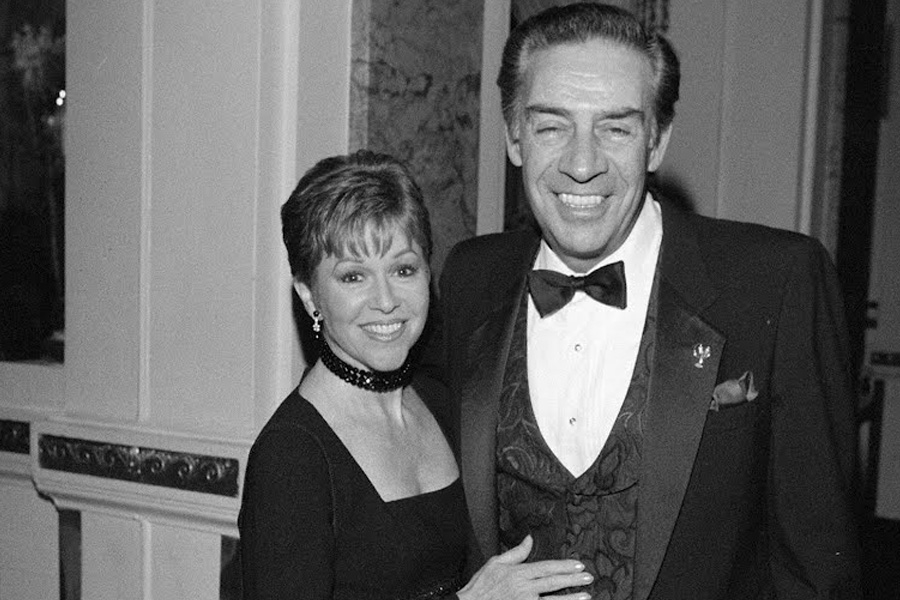
Basic Information
| Field | Details |
|---|---|
| Full Name | Elaine Angela Cancilla |
| Professional Name | Elaine Cancilla (later Elaine Cancilla Orbach) |
| Birth | January 19, 1940 |
| Death | April 1, 2009 |
| Birthplace | Pittsfield, Massachusetts, USA |
| Place of Death | New York City, USA |
| Parents | Salvatore Cancilla; Anna (Finelli) Cancilla |
| Siblings | Rita Hubbard; Robert Cancilla |
| Spouse | Jerry Orbach (m. 1979; d. 2004) |
| Stepchildren | Anthony “Tony” Orbach; Christopher “Chris” Orbach |
| Occupation | Stage and musical-theatre dancer; actress |
| Training | School of American Ballet (scholarship) |
| Notable Stage Credits | Here’s Love (1963–1964), Flora, The Red Menace (1965), Sweet Charity (mid-1960s), Cry for Us All (1970), How to Succeed in Business Without Really Trying (ensemble/understudy in various productions) |
| Cause of Death | Pneumonia |
| Legacy Honors | Jerry Orbach Theater; Elaine Cancilla-Orbach Rehearsal Studio; “Jerry Orbach Way” dedication |
The arc of a Broadway dancer
Elaine Angela Cancilla grew up in Pittsfield, Massachusetts, a place whose winters demand resilience and whose communities prize discipline—qualities that would serve her on Broadway. By her late teens (circa 1957), a fateful audition carried her to New York City and into the rarefied halls of the School of American Ballet, where she trained on scholarship. Classical rigor tempered her craft, but it was the pulse of musical theatre that ultimately claimed her heart.
The early 1960s found her in the engine room of Broadway: the ensemble. She danced in Meredith Willson’s Here’s Love (1963–1964), stepped into the stylish new world of Kander & Ebb’s era with Flora, The Red Menace (1965), and lived the pop-jazz swirl of Sweet Charity. She was the type of artist a show relies on—alert in the wings, ready with an understudy’s precision, able to fit seamlessly into various productions of How to Succeed in Business Without Really Trying, and bringing texture to titles like Cry for Us All (1970). If stars are the marquee lights, dancers like Elaine are the electricity that makes those lights burn.
Her work was not about celebrity so much as about craft and community. She came up in the long shadow of Balanchine yet found her rhythm in musical theatre’s storytelling. Night after night, number after number, she helped lift an audience’s mood by a few degrees—no small feat in an era when Broadway was reinventing itself for modern tastes.
Meeting Jerry and building a life in performance
Elaine’s world shifted in the mid-1970s when her path crossed with actor Jerry Orbach, a Broadway stalwart who originated El Gallo in The Fantasticks and later Billy Flynn in Chicago. They met while working on Chicago; a professional friendship deepened into love, and in 1979 they married. Their partnership became a story of two working artists supporting one another through theatrical peaks and valleys, touring schedules, career transitions, and later the demands of television fame.
Through the 1980s and 1990s, as Jerry’s screen presence expanded and his television role on Law & Order turned him into a household name, Elaine remained connected to the theatre community. She moved fluidly between the private strength of a partner and the public grace required when a loved one’s work is celebrated. After Jerry’s death in December 2004, she stepped forward to accept honors and to steward his memory with a clarity that suggested both devotion and stagecraft.
Legacy and stewardship: theaters, street signs, and a rehearsal room
Elaine’s most visible legacy work arrived in 2007, when the Jerry Orbach Theater was dedicated in Midtown Manhattan. Fittingly, the space next door became the Elaine Cancilla-Orbach Rehearsal Studio—a living tribute to the process she embodied. Rehearsal rooms are where shows become themselves; naming one for Elaine honored the backstage humanity of theatre, the hours of repetition, discovery, and grit that audiences never see.
That same period included the dedication of “Jerry Orbach Way,” a street-sign honor celebrating a performer who defined a generation of stage and screen. Elaine’s presence at these events was emblematic: she wasn’t only preserving a legacy, she was binding it to places where young artists would walk in, warm up, and try to make their own mark.
Family ties: roots, siblings, and a blended household
Elaine was the daughter of Salvatore Cancilla and Anna (Finelli) Cancilla. Her Pittsfield roots formed a through-line to a life spent in rehearsal halls and orchestra pits. She had two siblings—Rita Hubbard and Robert Cancilla—who survived her and appear in public records and obituaries.
Her marriage to Jerry connected her to his sons from his first marriage: Anthony “Tony” Orbach and Christopher “Chris” Orbach. With the blended family came joys and, later, challenges. After Jerry’s passing, differences emerged over matters of the will, trusts, and control of personal effects. Public reporting from 2008 through the early 2010s chronicled tensions over trust distributions—some structured to vest upon Elaine’s death—and disagreements around the treatment of donated items and posthumous honors. Through it all, Elaine maintained that she had cared deeply for Jerry, stood by him through lean years, and acted in ways she believed aligned with his wishes.
Advocacy, generosity, and the quiet work of care
Beyond the spotlights, Elaine’s story carried notes of advocacy. She spoke publicly about cancer, appeared in informational clips, and amplified awareness around organ and tissue donation—most notably Jerry’s eye donation, which restored sight for recipients. In a Broadway culture that often defines legacy by posters and Playbills, she widened that meaning to include medical charity and tangible acts of care.
This was consistent with her life’s ethos: if performance is an act of generosity, then supporting medical causes is generosity made literal. Her participation in these efforts showed a dancer’s sense of timing—arriving with grace when a message needed a messenger.
Timeline at a glance
- 1940-01-19: Born in Pittsfield, Massachusetts.
- circa 1957: Moves to NYC; earns scholarship training at the School of American Ballet.
- 1963–1964: Appears in Here’s Love on Broadway.
- 1965: Performs in Flora, The Red Menace.
- mid-1960s: Dances in Sweet Charity; takes ensemble/understudy roles in How to Succeed in Business Without Really Trying.
- 1970: Appears in Cry for Us All.
- 1975–1979: Professional connection with Jerry Orbach deepens; married in 1979.
- 2004-12-28: Jerry Orbach dies; Elaine begins visible stewardship of his legacy.
- 2007: Jerry Orbach Theater dedicated; adjacent Elaine Cancilla-Orbach Rehearsal Studio named.
- 2008–2014: Publicly reported estate and trust disputes with stepchildren.
- 2009-04-01: Elaine dies of pneumonia in New York City at age 69.
Selected credits (stage)
| Production | Year(s) | Role/Capacity |
|---|---|---|
| Here’s Love | 1963–1964 | Ensemble/Dancer |
| Flora, The Red Menace | 1965 | Ensemble/Dancer |
| Sweet Charity | mid-1960s | Ensemble/Dancer |
| Cry for Us All | 1970 | Ensemble/Dancer |
| How to Succeed in Business Without Really Trying | various | Ensemble/Understudy |
These credits represent her Broadway-era presence; she also performed off-Broadway and in touring contexts typical for working dancers of the period.
The final bow
Elaine Cancilla Orbach died on April 1, 2009, in New York City due to pneumonia. She was 69. Her memory endures in rehearsal spaces bearing her name, in the stories told by those who shared a stage with her, and in the ongoing work of the theatre community she loved. The arc of her life feels like a classic musical: beginnings in a small town, a leap to the city, a career built number by number, and a legacy that continues to hum backstage where new shows find their footing.
FAQ
Did Elaine Cancilla Orbach perform on Broadway?
Yes. Her credits include Here’s Love (1963–1964), Flora, The Red Menace (1965), Sweet Charity, Cry for Us All (1970), and ensemble/understudy work in various productions.
Where did she train as a dancer?
She trained at the School of American Ballet in New York City on scholarship as a teenager.
Whom did she marry?
She married actor Jerry Orbach in 1979 and remained his partner until his death in 2004.
Did she have children?
Elaine did not have children of her own; she was stepmother to Jerry’s sons, Anthony “Tony” Orbach and Christopher “Chris” Orbach.
What was her role in preserving Jerry Orbach’s legacy?
She helped drive honors like the Jerry Orbach Theater dedication, the “Jerry Orbach Way” street sign, and the naming of the Elaine Cancilla-Orbach Rehearsal Studio.
How did she contribute to charitable causes?
She appeared in public-awareness efforts around cancer and organ/tissue donation, highlighting Jerry’s eye donation and encouraging medical philanthropy.
What was the cause of her death?
She died of pneumonia on April 1, 2009, in New York City.